Polyurea Other Specialty Coatings
Our polyurea specialty coatings are extremely durable, waterproof, and instantly cured elastomeric coatings. There are numerous applications that benefit from polyurea's unique properties. Continue browsing this page to learn more.
When you need durability and toughness!
POLYUREA OTHER SPECIALTY COATINGS
Unmatched Durability with RAD Systems’ Specialty Coatings
For over decades, RAD Systems has been a leader in using polyurea and polyurethane hybrid coatings in tough, high-performance applications. While these coatings can be challenging to work with, they deliver some of the best protection and durability you’ll find anywhere.
One of the most common uses for polyurea is in sprayed-in bedliners for trucks. But that’s just the beginning. Our specialty coatings also protect and enhance a wide range of equipment and surfaces, including:
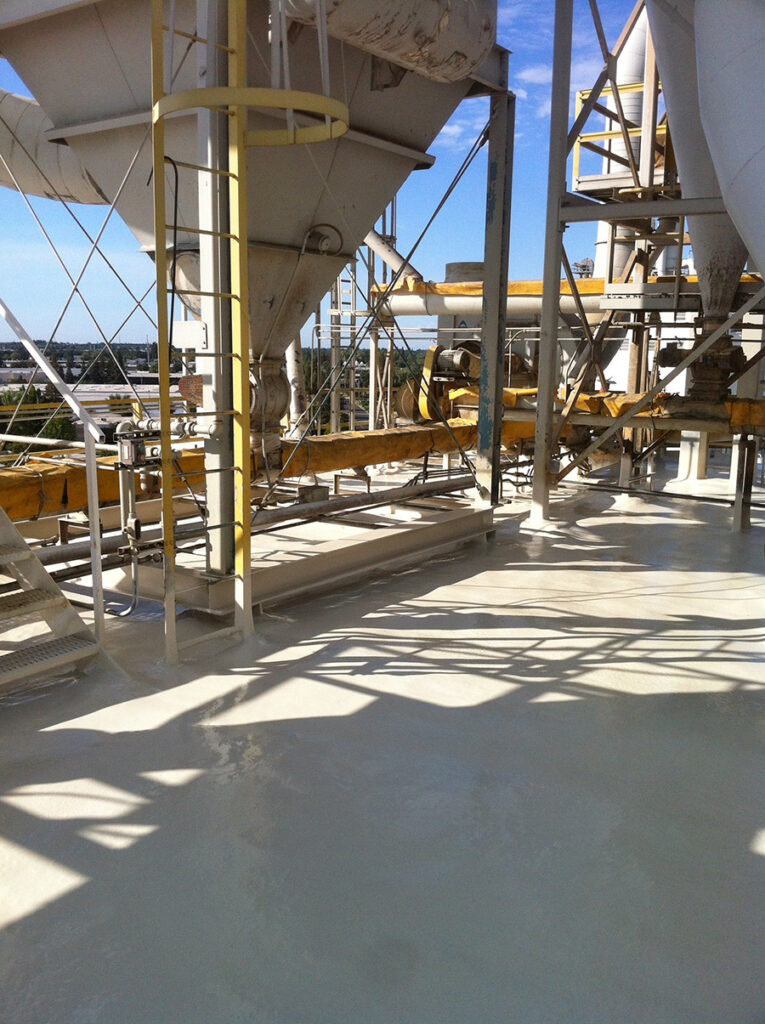
- Secondary containment for tank fields (to prevent leaks and spills)
- Protective coatings for tractors and heavy equipment
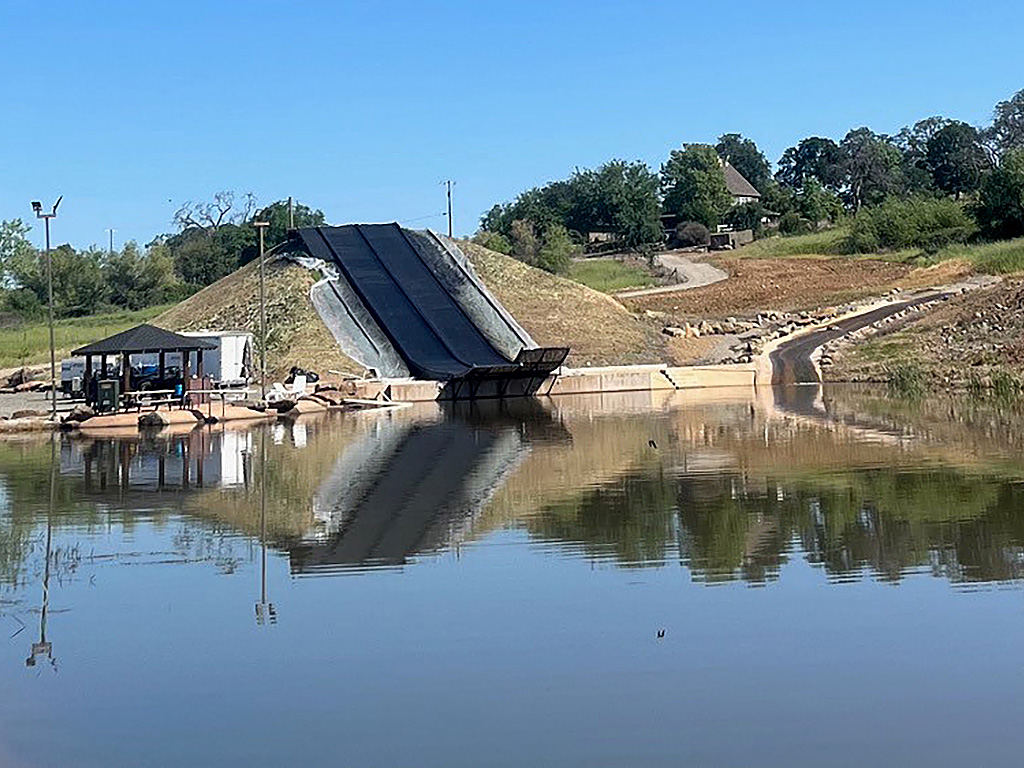
- Waterproof liners for ditches and drainage systems
- Durable metal coatings for marine equipment
- Off-road truck protection for extreme conditions
- And many more applications where toughness and long-lasting durability are a must.
If you need a solution that stands up to the toughest challenges, RAD Systems has you covered with the most reliable and long-lasting coatings on the market.
Polyurea: The Most Versatile and Tough Coating System in the World:
Polyurea is an elastomeric coating and lining system formed by the reaction of an isocyanate component (A-side) with an amine-terminated resin (B-side). This reaction is extraordinarily fast — producing a material that combines the toughness of hard industrial coatings with the flexibility of rubber, creating performance characteristics unmatched by virtually any other coating technology.
First developed commercially in the late 1980s by Dr. Dudley Primeaux II at Texaco Chemical, polyurea was initially created to solve problems that no existing coating could address. What emerged was a material so capable that it has since penetrated virtually every industry on earth.
Understanding polyurea's extraordinary performance begins with its unique chemistry:
The Reaction
- Isocyanate (A-side) + Amine-terminated polyether resin (B-side)
- Reaction occurs within seconds — gel time of 3–5 seconds, tack-free in 15–30 seconds
- No catalyst required — the amine drives an extremely fast, highly exothermic reaction
- Moisture does NOT affect the cure — polyurea cures in rain, humidity, and cold
- Full mechanical properties achieved within minutes to hours
What the Chemistry Creates
- Dense, cross-linked polymer network — extremely tight molecular structure
- Urea linkages are among the strongest chemical bonds in polymer chemistry
- No pinholes, no porosity — a truly monolithic, seamless membrane
- Simultaneously hard and flexible — a combination most materials cannot achieve
Three Types of Polyurea
| Type | Chemistry | Characteristics |
| Pure Polyurea | 100% amine-terminated resins | Fastest cure, highest performance, most expensive |
| Hybrid Polyurea | Blend of amine and hydroxyl resins | Balanced performance and cost |
| Polyurethane-Urea | Mix of urethane and urea chemistry | More forgiving, wider application window |
These numbers tell the story of why polyurea outperforms virtually everything:
| Physical Property | Polyurea | Epoxy | Urethane | Rubber Lining |
| Tensile strength | 2,000–6,000 psi | 8,000–10,000 psi | 1,500–3,000 psi | 1,000–2,500 psi |
| Elongation at break | 300–800% | 0–5% | 100–400% | 200–600% |
| Tear resistance | 150–400 pli | Very low | 50–150 pli | 100–300 pli |
| Hardness (Shore A/D) | Shore A 60 – Shore D 70 | Shore D 80–90 | Shore A 40–80 | Shore A 30–70 |
| Impact resistance | Exceptional | Brittle | Good | Good |
| Abrasion resistance | Exceptional | Good | Very Good | Good |
| Crack bridging | Up to 1/4"+ | None | Up to 1/8" | Moderate |
| Water absorption | <1% | 0.1–0.5% | 0.5–2% | 1–3% |
The combination of high tensile strength AND 300–800% elongation is what makes polyurea extraordinary. Most tough materials are brittle. Most flexible materials are weak. Polyurea is both tough and flexible simultaneously — a property profile found almost nowhere else in coating technology.
Polyurea's cure speed is not just a convenience — it is a fundamental performance and economic advantage:
| Milestone | Polyurea | Epoxy | Urethane | Acrylic |
| Gel time | 3–5 seconds | 20–40 minutes | 5–30 minutes | N/A |
| Tack-free | 15–30 seconds | 2–6 hours | 1–4 hours | 30–60 min |
| Walk-on time | 1–5 minutes | 8–24 hours | 4–8 hours | 1–2 hours |
| Return to service | 1–4 hours | 24–72 hours | 24–48 hours | 4–24 hours |
| Full cure | 24 hours | 5–7 days | 3–7 days | 24–72 hours |
Why This Matters:
- Bridges, highways, and infrastructure can return to service same day
- Industrial facilities minimize downtime — critical in 24/7 operations
- Weather window dependency is dramatically reduced
- Multiple coats in one day — projects completed faster
- Contamination window is nearly zero — surface exposed for seconds, not hours
This single property separates polyurea from virtually every other high-performance coating:
Polyurea cures perfectly in:
- 100% relative humidity
- Active rain (for spray applications)
- Temperatures as low as -20°F
- Temperatures as high as 300°F substrate temperature
- Underwater applications with specialized formulations
- Green concrete — can be applied over freshly placed concrete
Why Competing Systems Fail Here:
- Epoxy: Cannot be applied below 50°F — amine blush in humidity
- Urethane: Moisture causes bubbling — must have dry substrate
- Acrylic: Cannot cure below 40°F — freezes before film forms
- Polyurea: None of these limitations apply
For contractors, this means year-round application in virtually any climate. For building owners, it means projects aren't delayed by weather — a massive scheduling and economic advantage.
THE VERSATILITY — Industry by Industry:
Bridge Deck Waterproofing
- One of polyurea's earliest and most proven applications
- Applied to steel and concrete bridge decks to prevent corrosion and chloride infiltration
- Withstands millions of wheel load cycles without fatigue cracking
- Bridges crack at expansion joints — polyurea elongates and maintains integrity
- Used on major infrastructure worldwide including DOT-specified bridge projects
- Applied at 80–125 mils dry film thickness
- Departments of Transportation in 40+ states have approved polyurea specifications
Parking Garage Decks and Walls
- Seamless waterproofing over complex garage deck geometry
- Resists chloride penetration from de-icing salts — primary cause of rebar corrosion
- Withstands vehicle traffic, turning loads, and impact from dropped objects
- Applied over drains, expansion joints, and transitions without separate detailing
- Quick return to service — garages can reopen same day in many cases
Highway and Roadway Applications
- Bridge expansion joint sealing
- Pothole repair systems — polyurea fill bonds permanently and flexes with pavement
- Tunnel waterproofing — walls, ceilings, and floors
- Sound barrier wall coatings — impact and weathering resistance
- Median barrier and guardrail coatings
Rail and Transit
- Rail car underbody and wheel well coatings — extreme abrasion and impact resistance
- Tunnel lining waterproofing
- Platform waterproofing over occupied transit structures
- Train wash facility floor coatings — chemical and abrasion resistance
Secondary Containment
- One of polyurea's most critical industrial applications
- Surrounds chemical storage tanks, transformers, fuel storage, and hazardous material areas
- Must contain 100% of tank volume in the event of catastrophic failure
- Polyurea provides:
- Seamless, jointless containment with no leak points
- Chemical resistance to acids, bases, solvents, and fuels
- Flexibility to accommodate thermal expansion of large tanks
- Rapid installation to minimize facility downtime
- EPA and regulatory compliance for hazardous material containment
Mining Applications
- Ore chutes and transfer point linings — extreme abrasion from rock and mineral flow
- Tailings pond linings — containment of acidic mine waste
- Conveyor belt impact zones — absorption of falling rock loads
- Hydrocyclone linings — slurry abrasion resistance
- Truck bed linings for haul trucks — impact and abrasion in the harshest conditions
- Pipeline linings — internal protection against slurry flow erosion
Oil & Gas
- Pipeline internal and external coating — corrosion and abrasion protection
- Tank linings for crude oil, refined products, and produced water
- Offshore platform deck coatings — salt spray, impact, and UV resistance
- Pipe rack and structural steel coatings
- Secondary containment at well pads and processing facilities
- Splash zone protection on offshore structures — below waterline to above
Manufacturing Facility Floors
- Chemical processing plants — acid and solvent resistance
- Food and beverage facilities — FDA-compliant formulations, easy sanitation
- Automotive manufacturing — oil, hydraulic fluid, and forklift impact resistance
Heavy manufacturing — forklift traffic, dropped loads, and vibration
Water Treatment Facilities
- Potable water tank linings — NSF/ANSI 61 certified formulations
- Filter bed linings — abrasion and chemical resistance
- Clarifier and settling tank linings
- Pump station floor and wall coatings
- Canal and channel linings — water retention and abrasion resistance
Wastewater Treatment
- Digester linings — resistance to hydrogen sulfide (H₂S) and biogenic acid
- Biogenic sulfuric acid (BSA) is one of the most destructive forces in wastewater infrastructure — dissolves concrete at alarming rates
- Polyurea provides complete barrier protection against BSA attack
- Manhole rehabilitation — sprayed internally to restore structural integrity and waterproofing
- Lift station coatings — wet/dry cycling and chemical resistance
- Odor control — sealing concrete surfaces reduces H₂S off-gassing
Stormwater & Environmental
- Detention basin and retention pond linings
- Stormwater vault coatings
- Environmental remediation containment linings
- Landfill leachate containment systems
- Wetland protection — waterproofing of constructed wetland cells
The military was among the earliest major adopters of polyurea — and continues to be one of the most demanding users:
Blast Mitigation — The Most Dramatic Application
This is where polyurea's properties produce almost miraculous results:
- The US Army Corps of Engineers and DARPA have extensively tested polyurea for blast resistance
- When applied to the interior face of masonry walls, polyurea dramatically changes blast behavior:
- Uncoated masonry wall hit by blast: shatters into lethal projectiles
- Polyurea-coated masonry wall: deforms and stretches — fragments remain attached to membrane
- Casualty reduction in tested scenarios: dramatic
- Applied to vehicle underbodies — reduces IED blast injury to occupants
- Polyurea absorbs and distributes blast energy rather than fragmenting
Military Applications:
- HESCO barrier linings — blast containment walls at forward operating bases
- Vehicle armor supplementation — Humvee, MRAP, and APC underbody protection
- Building hardening — embassy, barracks, and command post blast protection
- Ammunition storage facility linings
- Aircraft carrier deck non-skid coatings
- Field hospital and shelter waterproofing
- Fuel bladder coatings and linings
Ship and Vessel Applications
- Hull coatings — abrasion resistance against marine growth removal, dock impact, and debris
- Ballast tank linings — saltwater corrosion protection in one of the most aggressive environments on earth
- Cargo hold linings — abrasion and impact from loading/unloading operations
- Deck non-skid systems — permanent, durable slip resistance
- Bilge coatings — fuel, oil, and chemical resistance in a wet environment
Offshore Structures
- Platform deck waterproofing and non-skid systems
- Splash zone protection — alternating wet/dry and UV is uniquely destructive; polyurea handles both
- Subsea pipeline coating systems
- Riser pipe abrasion protection
- Jacket structure coatings — corrosion protection in marine environment
Marine Infrastructure
- Lock and dam structures — abrasion from debris and ice
- Boat ramp and dock coatings — impact, UV, and chemical resistance
- Marina fuel dock spill containment
- Fish hatchery tank linings — NSF-compliant, abrasion-resistant, easy to sanitize
Roofing
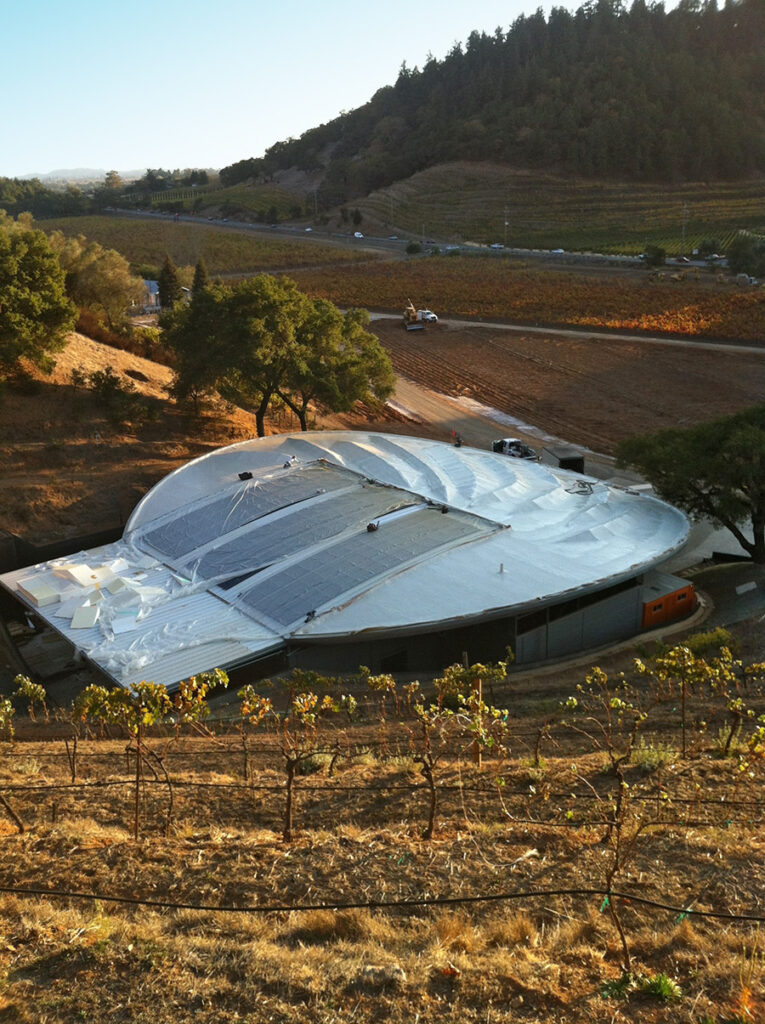
- Over spray polyurethane foam (SPF) — polyurea topcoats for extreme durability
- Metal roof restoration — waterproofing and UV protection with superior impact resistance
- Roof-to-wall transitions and complex detail work — seamless application around any geometry
- Green roof waterproofing membranes
Pedestrian Decks and Plazas
- Balconies and elevated walkways — seamless waterproofing under tile or exposed finish
- Plaza deck waterproofing under pavers and hardscape
- Pool decks — chemical resistance to chlorine and pool chemicals
- Stadium and arena concourse waterproofing
Below-Grade Waterproofing
- Foundation walls — blindside and positive-side waterproofing
- Elevator pit linings — permanent waterproofing in a perpetually wet environment
- Tunnel and underground structure waterproofing
- Plaza and podium deck waterproofing above occupied parking structures
Truck Bed Liners — The Consumer Face of Polyurea
- The most widely recognized consumer polyurea application
- Spray-in bedliners (LINE-X, Rhino Linings, ArmorThane) are polyurea or hybrid polyurea
- Withstand:
- Impact from heavy cargo and tools
- Abrasion from sliding loads
- UV exposure — color-stable formulations
- Temperature extremes
- Chemical spills
- This consumer application introduced millions of people to polyurea performance
Agricultural Infrastructure
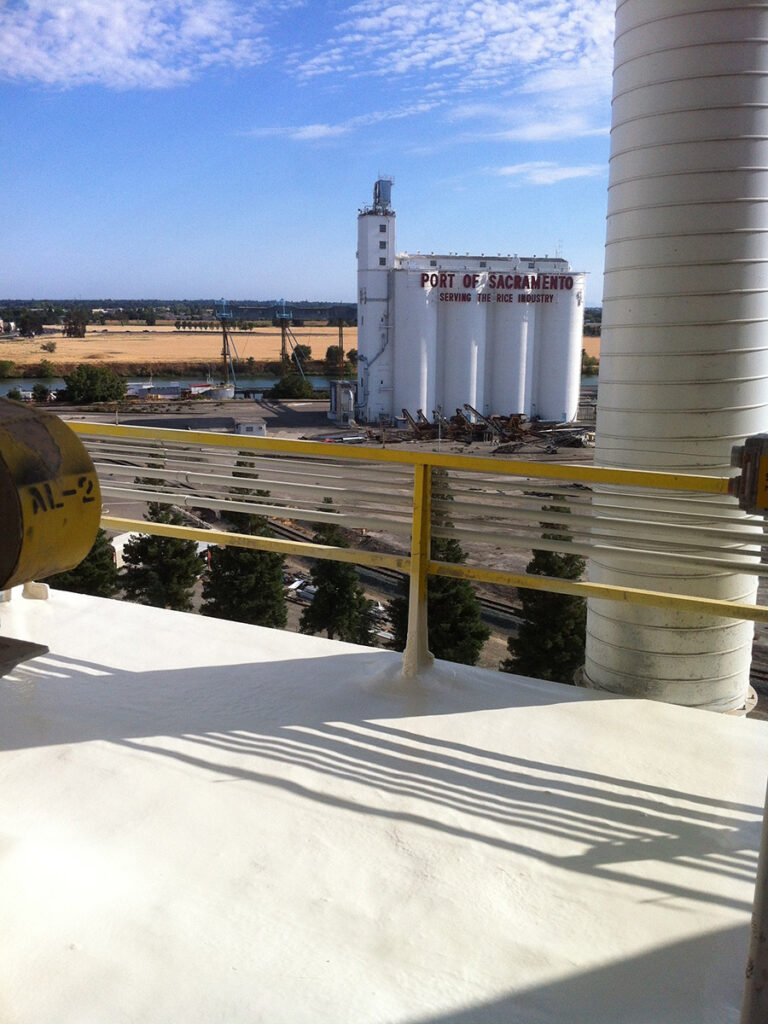
- Grain silo and bin linings — abrasion from grain flow, moisture protection
- Manure pit and lagoon linings — containment of agricultural waste
- Irrigation canal linings — water retention and abrasion from sand and debris
- Greenhouse floor and bench coatings
- Equipment coatings — chemical and impact resistance
Food Processing Facilities
- Floor coatings in USDA and FDA regulated environments
- NSF/ANSI 61 certified formulations for food contact surfaces
- Drain channel linings — chemical resistance and easy cleaning
- Cold storage floor coatings — performs at sub-zero temperatures where other coatings fail
- Processing tank linings — chemical resistance to acids, sanitizers, and cleaning agents
- Walk-in cooler and freezer floors — thermal shock resistance
An often overlooked but significant polyurea market:
- Water park slide linings — smooth, durable, chemical-resistant surface that withstands millions of ride cycles
- Wave pool and lazy river linings — waterproofing and surface durability
- Theme park ride structure coatings — UV stability, impact resistance, and weathering
- Skateboard park surfaces — seamless, durable, and slip-resistant
- Playground equipment coatings — impact absorption and weathering resistance
- Stadium and arena floor systems
- Aquarium tank linings — NSF-compliant, seamless, safe for marine life
Polyurea's role as a spray foam roofing topcoat deserves special attention:
Why Polyurea Over Silicone or Acrylic on SPF?
| Property | Polyurea Topcoat | Silicone Topcoat | Acrylic Topcoat |
| Impact resistance | Exceptional | Moderate | Moderate |
| Hail resistance | Superior | Good | Limited |
| Foot traffic durability | Excellent | Good | Moderate |
| Tensile strength | 2,000–4,000 psi | 200–400 psi | 200–400 psi |
| Elongation | 300–500% | 300–500% | 100–300% |
| Service life on SPF | 15–25 years | 10–25 years | 7–15 years |
For high-traffic roofs, hail-prone regions, and industrial facilities, polyurea topcoats dramatically extend SPF roof life.
Polyurea's chemical resistance makes it suitable for the most demanding containment applications:
| Chemical Class | Resistance |
| Aliphatic hydrocarbons (fuels, oils) | Excellent |
| Aromatic hydrocarbons (benzene, toluene) | Good to Moderate |
| Dilute acids (pH >2) | Excellent |
| Concentrated acids | Formulation dependent |
| Alkalis and bases | Excellent |
| Saltwater and brine | Excellent |
| Chlorinated water | Excellent |
| Alcohols | Good |
| Ketones and esters | Moderate |
| Hydrogen sulfide (H₂S) | Excellent |
| Biogenic sulfuric acid | Excellent |
| Crude oil and refined products | Excellent |
Polyurea's extraordinary performance comes with demanding application requirements:
Equipment
- Plural-component proportioner — maintains precise 1:1 volume ratio
- Heated hoses — materials must be maintained at 140–160°F at point of mix
- Impingement mix spray gun — A and B sides mix at the gun tip under high pressure
- 2,000–3,500 psi working pressures required
- Equipment investment: $25,000–$80,000 for a complete spray rig
Why This Matters
- Polyurea is extremely unforgiving of off-ratio application
- Temperature, pressure, and ratio must be precisely controlled
- This is why contractor certification and experience is non-negotiable
- Improperly applied polyurea can fail adhesion, cure improperly, or produce soft spots and delamination